Evaluating Misinformation Education Tools
Keeping up with misinformation online can feel overwhelming with misleading posts on every platform. Tools like Rumor Guard and Harmony Square help make sense of it by teaching you how to spot false claims and understand the tactics behind them. Whether through guided analysis or interactive gameplay, these tools give you the skills to think critically.
Rumor Guard
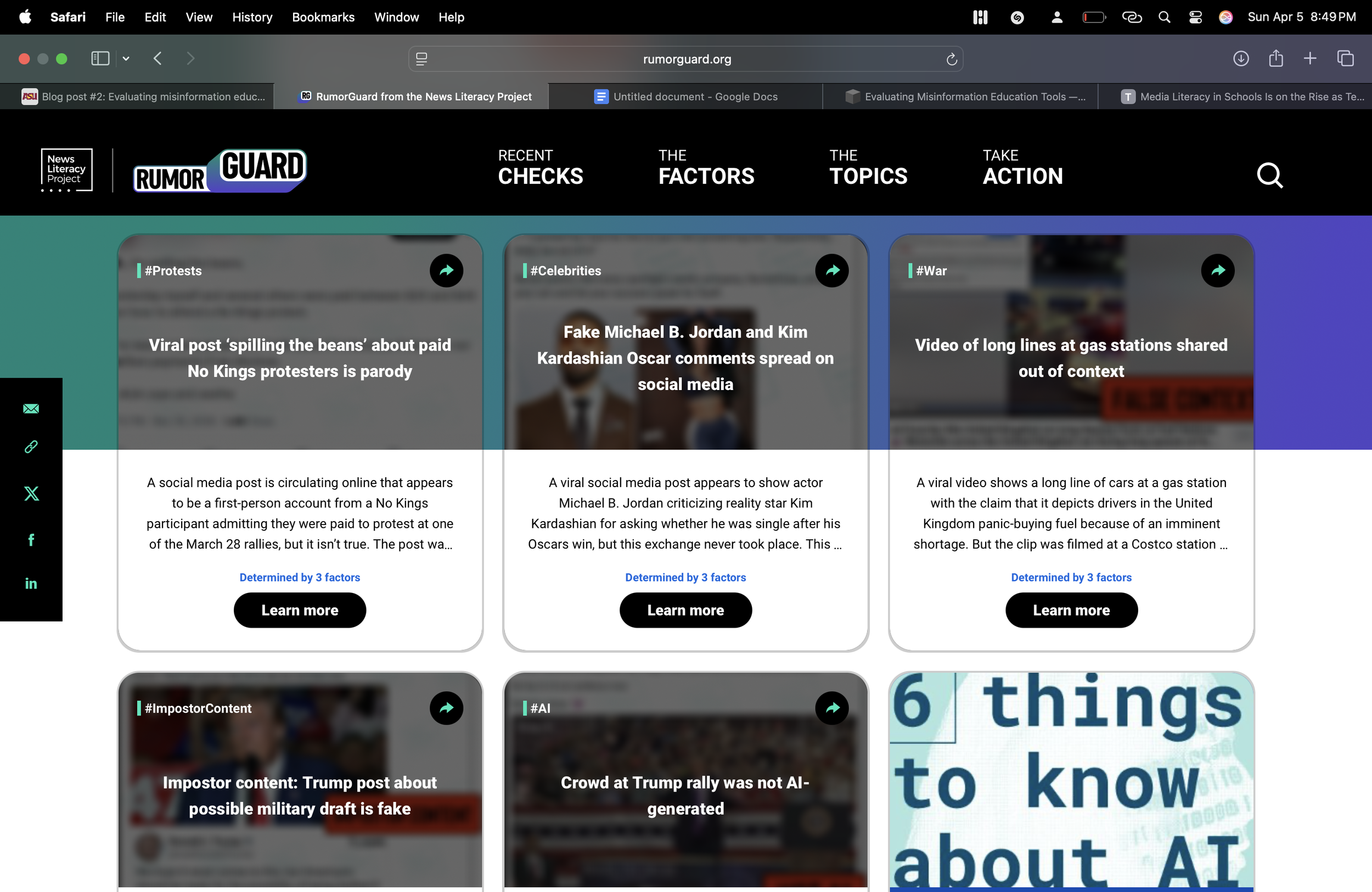
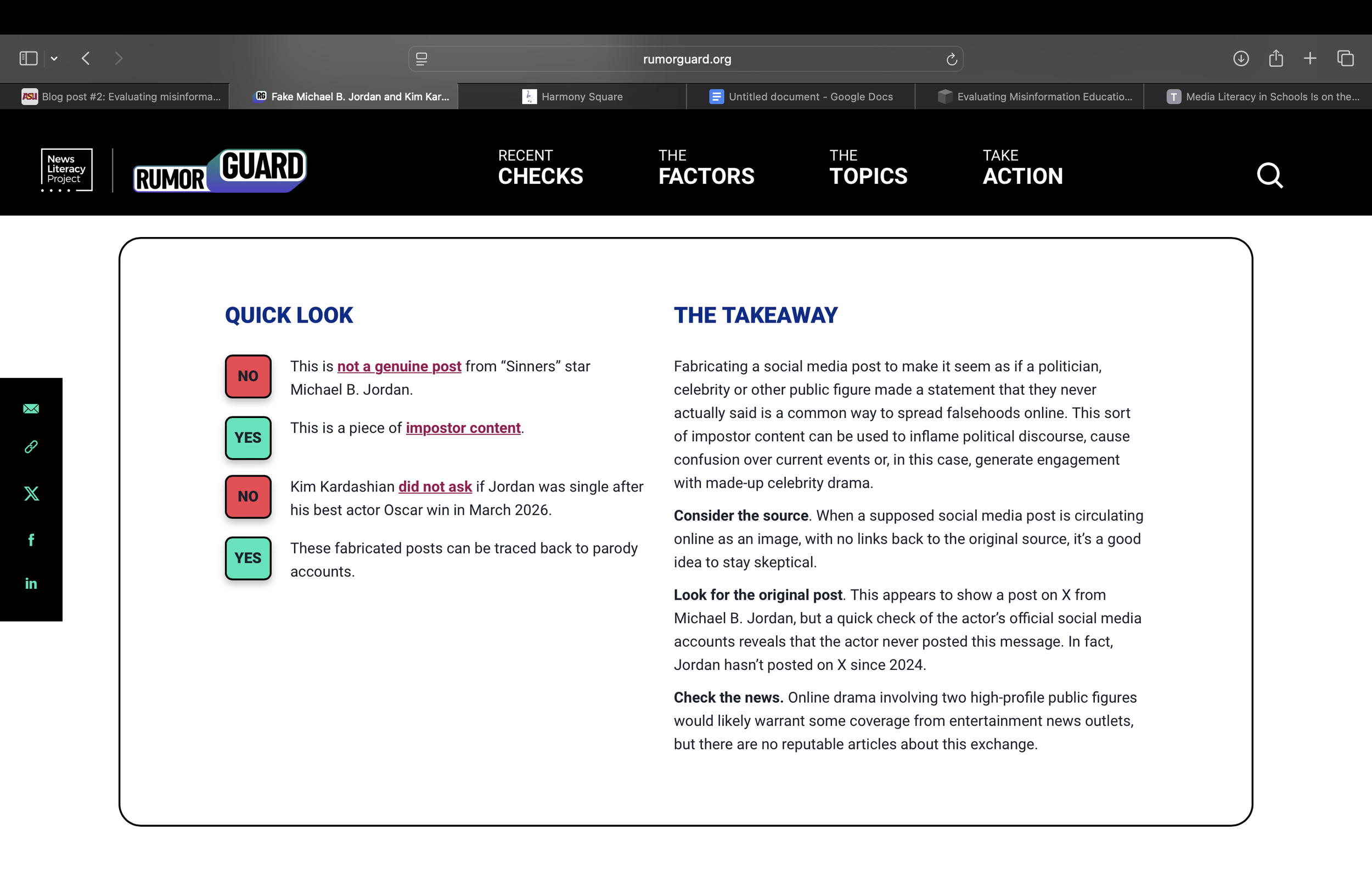
Rumor Guard is an interactive tool created by the News Literacy Project to help people figure out what is true and what is misleading on the internet. Using Rumor Guard is straightforward. You scroll through examples of viral posts that have been circulating online, choose one, and then run it through a factor test. Instead of just telling you that something is false, it guides you through five factors: Source, Evidence, Reasoning, Authenticity, and Context. For each factor, it asks specific questions, such as, "Has it been posted or confirmed by a credible source?" "Is there evidence that proves the claim?"" Is it based on solid reasoning?" "Is it authentic?" "And is the context accurate?" For each question, Rumor Guard also explains how to check sources and evaluate content on your own. If you cannot answer a good amount of these questions confidently, it is likely that the claim is misleading or false.
What Rumor Guard teaches participants goes beyond just spotting false claims. It helps you critically question sources and the reliability of information. I like that the tool is very direct and uses real posts that I have actually seen or heard about. This makes the lessons feel meaningful. In terms of effectiveness, Rumor Guard works well because it combines real world examples with guided analysis.
Harmony Square
Harmony Square is an interactive game designed to teach people about political misinformation and the tactics used to manipulate online communities. Instead of just explaining what misinformation is, it lets you step into the point of view of an “Chief Disinformation Officer” in the town of “Harmony Square” and try to spread misleading content yourself.
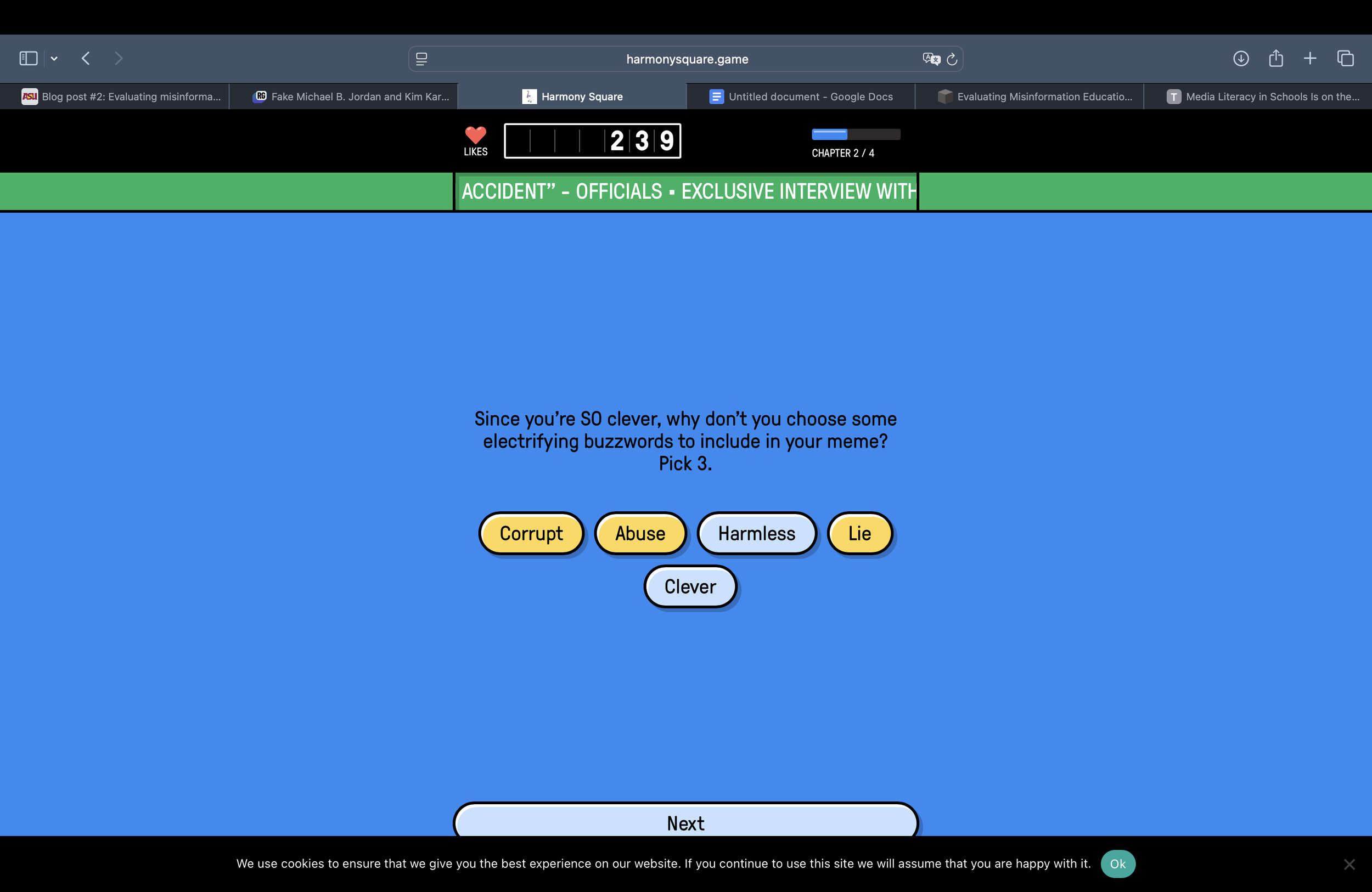
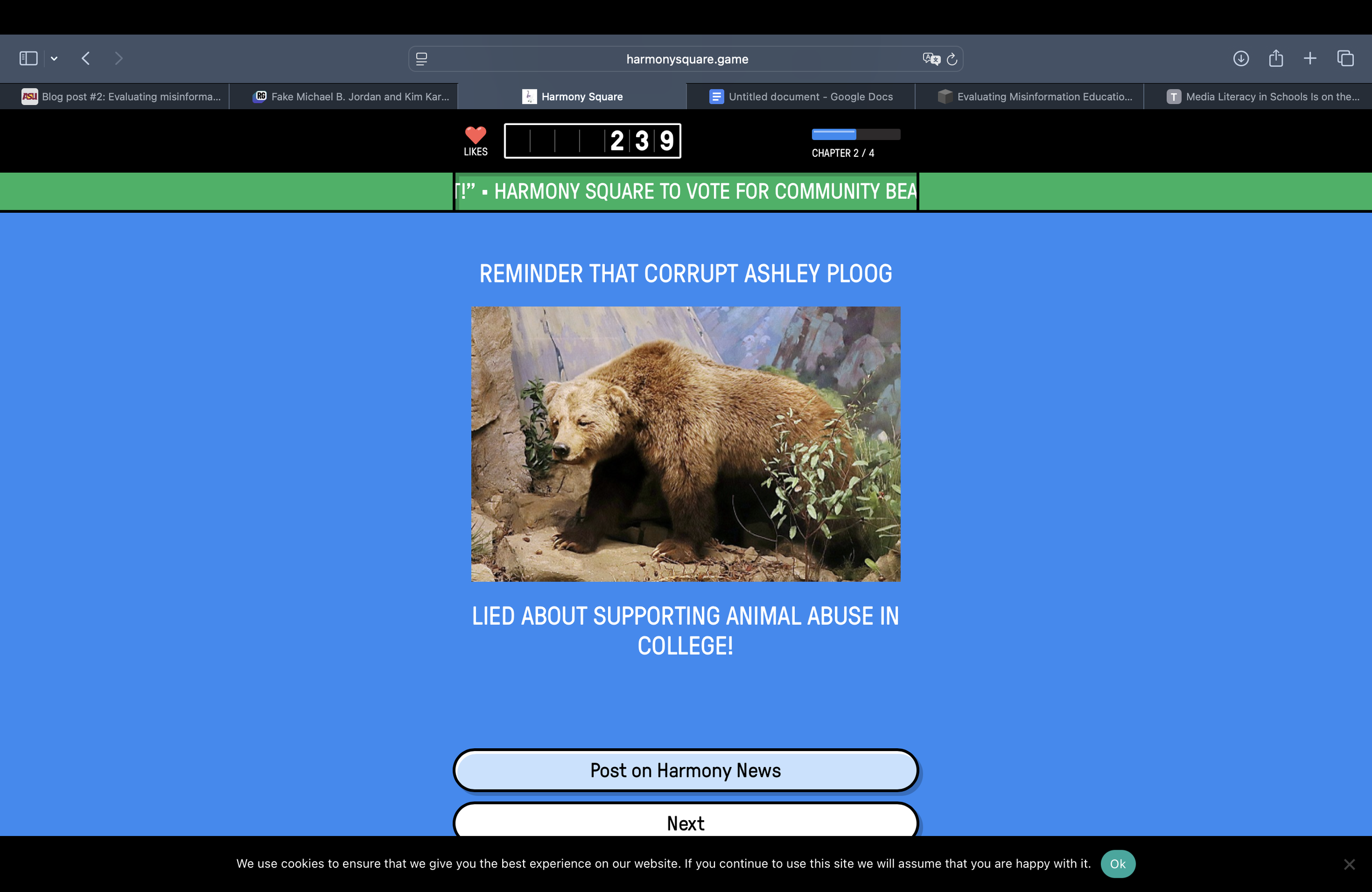
To play, you move through chapters, experimenting with tactics like emotional posts, fake accounts, and other things of that nature. By seeing how these strategies affect the town, you can start recognizing them in real life. Harmony Square teaches more than spotting false information, it helps you understand the mechanics behind it too.
I liked playing Harmony Square because it showed me how misinformation works in a way that reading about it never could. For example, in one chapter, the goal was to ruin a campaign. I was asked to choose words that would spark a reaction in the audience, and my job was to optimize on any feedback I received and further damage the campaign. Watching it play out made it clear how easily online content can build and manipulate emotions. It also gave me a new perspective on the people behind the screens.
I think interactive games and tools are a great way to understand misinformation because they put concepts that are second nature to media consumers to the forefront. However, most people aren’t just going to come across these tools and use them on their own. Reports about media literacy in schools highlight that many teachers are now introducing structured lessons to help students learn how to question what they see online and verify information. Even students themselves acknowledge that these skills don’t come easily just from scrolling social media. A Teen Vogue article (https://www.teenvogue.com/story/media-literacy-schools-misinformation) about growing media literacy education in classrooms published that only around 39 % of teens had received any news literacy instruction, yet 94 % of students said they believed schools should mandate it. This shows that without a structured curriculum, many young people lack the opportunity to build these skills on their own. This supports the idea that tools like Harmony Square or Rumor Guard are most effective when used in educational settings where teachers can guide discussion and help participants reflect on what they are learning and how to apply it in real life.